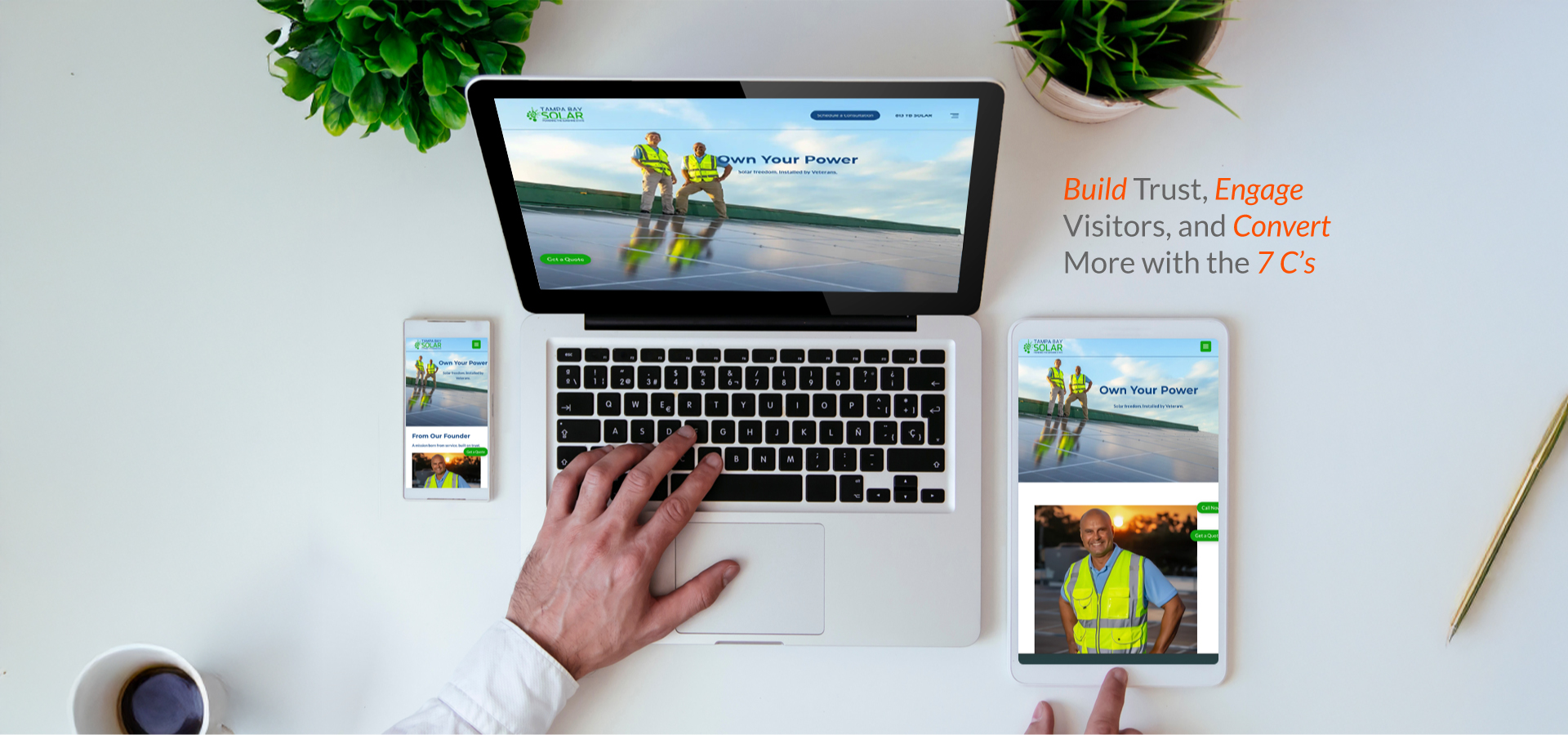
Your website is the digital face of your business. Visitors decide within just three seconds whether to stay on your site or leave. If your website looks confusing, loads slowly, or fails to explain your value clearly, most users will move on to a competitor.
A website becomes truly effective when it is designed with purpose and clarity. The 7 C’s of effective website design are seven key principles that ensure your site is professional, user-friendly, and results-driven. These principles help you create a website that looks professional, engages visitors, and encourages them to take action. This blog explains each of the 7 C’s easily and practically so you can apply them confidently to your own website.
Key Takeaways
- A clean and mobile-friendly website builds trust and keeps visitors engaged.
- Clear content and simple navigation help users find information quickly.
- Interaction and personalization build trust and encourage repeat visits.
- Every page should guide visitors toward an explicit action that drives conversions.
1. Context: Make a Strong First Impression
Context is the overall look and feel of your website. This includes layout, colors, fonts, images, and design style. Your website design should reflect your brand and appeal to the audience you want to reach.
A business website should look clean and well-organized, while creative brands can use bold visuals and colors. However, keeping the design simple is always essential. Too many elements on one page can confuse visitors and make them leave.
Your website must also work smoothly on mobile devices. Most users browse on their phones, and if your site is slow or looks broken on mobile, visitors will leave quickly.
2. Content: Share Clear and Useful Information
Content should encompass everything that is on your website, including text, images, and videos. Proper, clean content effectively conveys your message. Use simple words to inform the visitors about your identity, your products and services, and their benefits.
Your main pages need to provide immediate answers to frequently asked questions.
3. Community: Build Trust Through Interaction
Before people buy or contact you, they want to feel confident about your business. Showing genuine customer reviews and testimonials helps build that trust.
Live chat helps visitors ask questions easily. Social media links show your business is active and real. Helpful blogs and honest reviews build trust and make people feel comfortable choosing your brand.
4. Customization: Show Relevant Content
Visitors don’t want to waste time on content that isn’t useful to them. Your website should highlight what matters based on their past actions. Showing related products or suggesting relevant content helps users feel understood and keeps them engaged, which leads to more conversions.
5. Communication: Guide Users Clearly
Your website should clearly tell visitors what to do next. Use simple call-to-action buttons like “Contact Us,” “Get Started,” or “Book a Call.”
Make your contact details easy to find and use easy language. When instructions are simple, visitors are more likely to take action.
6. Connection: Make Navigation Easy
Your website menu should be simple and easy to understand, even for first-time visitors. Connect related pages so users can move naturally through your site.
For example, link blog posts to relevant services. A well-structured website feels easy to explore, like a well-organized store. When visitors find what they need quickly, they stay longer and trust your brand more.
7. Commerce: Make Actions Simple
If you sell products or services online, the process should be fast and easy. Keep forms short, offer simple payment options, and make sure everything works well on both mobile and desktop.
Even if you do not sell online, actions like booking a call or requesting a quote should be quick and straightforward. The easier it is to act, the more likely visitors will become customers.
Why the 7 C’s Matter
The 7 C’s of website design are practical guidelines that help your website perform better. When your site has a strong design, explicit content, easy navigation, user interaction, and simple actions, it becomes a powerful business tool.
Review your website using these seven points. Improve one area at a time. A well-designed website works like a full-time team member, attracting visitors and converting them into customers every day.
,