Most Advertising Doesn’t Fail.
Every week, a business owner somewhere pulls the plug on a digital advertising campaign after six weeks and concludes that “ads don’t work.” In most cases, the ads were doing exactly what they were supposed to do. The problem wasn’t the advertising. It was the absence of a system to capture, nurture, and convert the interest those ads generated.
Digital advertising is not a vending machine. You do not put money in one slot and have clients fall out the other. It is closer to farming — you prepare the ground, plant the seed, tend to it over time, and harvest when the crop is ready. The timeline is real, and it matters.
Understanding how advertising actually works is not optional if you want it to work for you. This page exists to give you that foundation.
What follows covers the three core elements of any effective digital campaign, why the timing of a purchase matters as much as the ad itself, what we measure and why, and what a realistic path from zero to a functioning marketing engine actually looks like.
What Makes Advertising Work: The Three Pillars
Every effective digital campaign rests on the same three foundations. Weakness in any one of them limits the whole.
1. Reach — Getting in Front of the Right People
Reach is about targeting. It does not matter how good your ad is if it lands in front of the wrong audience. Digital platforms — whether Google, Facebook, LinkedIn, or others — offer powerful targeting tools: demographics, job titles, interests, search intent, geographic location, and more. The goal is not to reach the most people. It is to reach the right people with enough consistency that your message has a chance to land.
Poor targeting is one of the most common reasons campaigns underperform. Broad reach feels like progress but wastes budget on people who will never buy from you.
2. Impact — A Message That Resonates and Prompts Action
Reach gets your message in front of the right person. Impact determines whether that person actually stops, pays attention, and does something. A high-impact ad speaks directly to a specific problem or aspiration your audience recognises in themselves. It is clear about what is being offered, credible enough to be believed, and gives someone a specific next step to take.
Weak creative — vague headlines, generic imagery, no clear call to action — is the second most common reason campaigns fail. People are scrolling fast. You have roughly two seconds to earn their attention.
3. Frequency — Showing Up More Than Once
This is where most business owners’ instincts are wrong. One person seeing one ad one time and making a purchase is rare. Research consistently shows that most buyers require multiple exposures to a message before they take action — often somewhere between seven and twelve touchpoints, depending on the product and the buyer.
Frequency is not about bombarding people. It is about building recognition, trust, and recall over time so that when a prospect is ready to buy, your name is the one that comes to mind. A campaign that appears twice and disappears accomplishes almost nothing. Sustained presence is what builds momentum.
The Buying Cycle Is Not on Your Schedule
One of the most important — and most overlooked — realities of digital advertising is this: even if your ad reaches exactly the right person, and even if that person is genuinely interested in what you offer, they are almost certainly not going to buy today.
Every product or service has a natural buying cycle — the time between first awareness and actual purchase. This cycle is driven by factors that have nothing to do with your ad: the size of the financial commitment, the complexity of the decision, competing priorities, internal approval processes, and simple human psychology. Depending on what you sell, that cycle might look like this:
| Typical TTP | Product / Service Type | What Drives the Cycle |
|---|---|---|
| Days | Impulse retail, low-cost consumer goods, event tickets | Low financial risk, immediate need, simple decision |
| 2–4 Weeks | Mid-range services, local tradespeople, software trials | Some comparison shopping, moderate commitment |
| 1–3 Months | Professional services, coaching, B2B solutions, high-end products | Larger investment, trust required, multiple decision stages |
| 3–12 Months | Business consulting, enterprise software, real estate, training programs | High cost, committee decisions, long evaluation process |
| 12+ Months | Major capital purchases, large contracts, complex B2B | Budget cycles, procurement processes, relationship-led |
A lead who clicked your ad last month and hasn’t bought yet is not a lost lead. They may be exactly where they should be in their decision process. The question is: are you still in front of them while they decide? Or did you disappear after the first click?
This is why lead nurturing is not a nice-to-have — it is the mechanism that keeps your business visible and credible throughout the entire buying journey. An ad alone cannot do this. You need a system.
Why Leads Need to Be Nurtured — Not Just Captured
Most businesses have a simple workflow when a lead comes in: someone fills out a form or sends an enquiry, and if they don’t convert quickly, they get forgotten. There is no follow-up sequence, no re-engagement, no ongoing presence. The lead goes cold, and it is treated as a failure of the advertising.
In reality, the advertising did its job. The system — or lack of one — failed.
An effective nurturing infrastructure does three things:
Responds immediately. Speed to lead matters enormously. A prospect who fills in a form and hears nothing for 24 hours is likely already talking to someone else. Automated immediate responses — personalised, relevant, and useful — keep your business front of mind at the highest point of interest.
Follows up in stages. Not everyone is ready to buy at the same point. A staged follow-up sequence — spread over days, weeks, or months depending on your buying cycle — keeps delivering value, building trust, and gently moving prospects through their decision process without requiring manual effort from you every time.
Tracks where prospects are. A pipeline gives you visibility. You can see who is warm, who has gone quiet, who needs a nudge, and who is close to a decision. Without this visibility, you are flying blind and relying on luck.
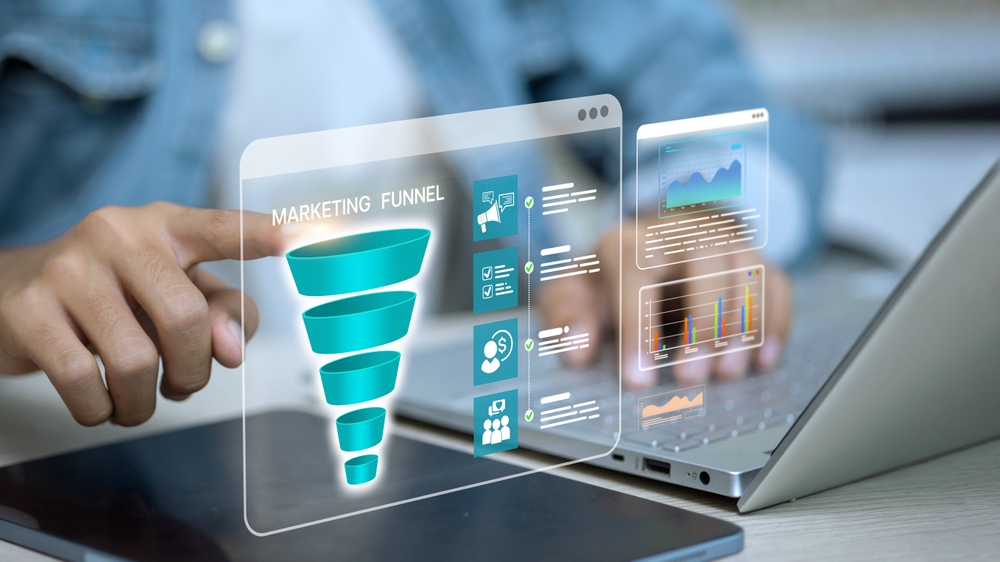
This combination of advertising strategy, funnel infrastructure, and pipeline management is what turns advertising spend into a predictable system rather than a recurring gamble.
What We Track and Why It Matters Early
Data is not just a reporting exercise. In the early weeks and months of a campaign, analytics are how we learn what is working, what is not, and where to direct effort. No campaign launches perfectly optimised — the data tells us how to get there.
Here are the core metrics we monitor and what each one tells us:
Impressions & Reach
How many people are seeing your ads, and how many unique individuals are being reached. This tells us whether your budget is generating enough visibility with the right audience to even begin building frequency.
Click-Through Rate (CTR)
The percentage of people who see your ad and click on it. A low CTR usually signals a creative or messaging problem — your ad is reaching the right people but not compelling them to act. This is one of the first things we optimise.
Cost Per Click (CPC)
What you are paying each time someone clicks your ad. CPC reflects both the competitiveness of your target audience and the quality score of your creative. We monitor this to ensure your budget is being spent efficiently.
Conversion Rate
Of the people who click, what percentage take the desired action — filling in a form, booking a call, making a purchase. This reveals whether the landing page or funnel is doing its job once traffic arrives.
Cost Per Lead (CPL)
The total cost to generate one qualified enquiry. This is one of the most important numbers for understanding whether a campaign is economically viable and where the threshold for profitability sits relative to your average client value.
Pipeline Stage Movement
How leads are progressing through your sales pipeline — from first contact through to conversion. This metric connects advertising performance to actual sales outcomes and helps identify where prospects are stalling in the process.
In the early weeks, we are essentially listening to the data. Every campaign goes through an optimisation phase where we refine targeting, test creative variations, adjust messaging, and improve conversion points. This is normal and expected — it is not a sign that something is wrong.
What Six Months Actually Looks Like
A functioning marketing engine is not built overnight. Here is a realistic picture of what progress looks like over the first six months of a properly structured campaign.
Months 1–2: Foundation — Build, Launch, and Listen
We set up your funnel infrastructure, configure your CRM and automation sequences, launch initial campaigns, and begin gathering data. Early results will vary — this is the learning phase. We are establishing baselines and identifying what the market responds to.
Months 3–4: Optimisation — Refine and Improve
With real data in hand, we begin optimising. Targeting is refined, weaker creative is replaced, conversion points are improved, and nurture sequences are adjusted based on how leads are behaving. Green shoots begin to appear. Lead quality typically improves noticeably in this period.
Months 5–6: Momentum — The System Starts to Work
By this stage, the campaign has found its rhythm. Targeting is sharper, creative is performing, and the nurture pipeline has been converting warm leads that entered the funnel earlier in the process. The compounding effect of frequency and consistent follow-up becomes visible in pipeline movement and conversions.
A Note on Contracts
We do not lock clients into 6 or 12-month contracts. That is a deliberate choice — we would rather earn your continued investment by delivering results than hold you to an agreement. What we do ask is that you go in with a clear understanding of the timeline above. A campaign cancelled at six weeks has not failed. It has simply not been given the time it needs to work. The businesses that see real returns from digital advertising are the ones that commit to building infrastructure and letting it compound — not the ones that treat every month as a trial run.